
Corrosion-Resistant Cylinders for Mining and Oil & Gas Environments

Updated: Aug 31
Mining and oil & gas operations depend on heavy machinery that must perform reliably under difficult conditions. From excavators and drilling equipment to lifting systems and processing machinery, hydraulic systems play an important role in moving heavy loads and controlling industrial equipment.
However, these environments can be hard on hydraulic cylinders. Dust, moisture, salt, chemicals, high pressure, temperature changes, and continuous mechanical loads can lead to corrosion, seal damage, surface wear, and leaks. Once a hydraulic cylinder starts to fail, equipment performance can quickly suffer, resulting in downtime, maintenance costs, and safety concerns
.
At Al Safeenah Engineering, we provide hydraulic cylinder manufacturing, repair, overhaul, testing, modification, and related machining services for demanding industrial applications. Our experience across oil & gas, marine, civil, and heavy industrial sectors allows us to understand the importance of reliable components in challenging environments.
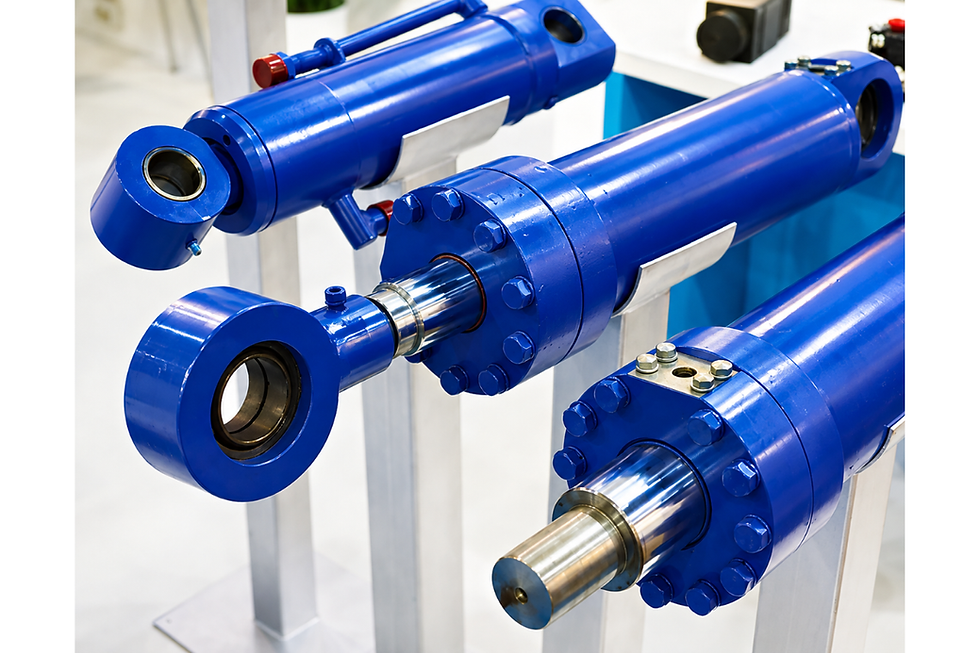
Why Corrosion is a Serious Concern for Hydraulic Cylinders?
Corrosion can gradually damage the metal surfaces of a hydraulic cylinder. While the problem may begin as surface oxidation, prolonged exposure can affect the cylinder rod, barrel, fittings, mounting points, and other components.
In mining environments, cylinders may be exposed to:
● Dust and abrasive particles
● Water and mud
● High humidity
● Mineral deposits
● Chemicals used during processing
● Continuous vibration and heavy loads
Oil & gas equipment can face additional challenges, particularly in offshore and coastal locations. Saltwater, humidity, chemicals, temperature changes, and high-pressure operations can create an environment where corrosion protection becomes especially important.
Where Corrosion-Resistant Cylinders Are Used?
Corrosion-resistant hydraulic cylinders can be useful across many areas of mining and oil & gas operations.
Mining Equipment
Hydraulic cylinders are commonly used in heavy equipment that performs lifting, digging, pushing, crushing, and material-handling tasks.
Typical applications include:
● Excavators
● Loaders
● Drilling equipment
● Crushing machinery
● Material-handling systems
● Conveyor-related equipment
● Heavy lifting equipment
● Mining maintenance machinery
Oil & Gas Equipment
Oil & gas operations also depend on hydraulic systems for controlled movement and force. Hydraulic cylinders may be used in drilling, lifting, production, maintenance, and other industrial equipment.
They may be exposed to high pressure, temperature variations, moisture, chemicals, and corrosive environments. Selecting the right cylinder construction and surface protection can help improve reliability.
Al Safeenah Engineering supports the oil & gas sector through precision machining and fabrication, producing components designed for demanding pressure, temperature, and corrosion-prone environments.
What Makes a Hydraulic Cylinder Corrosion Resistant?
Corrosion resistance is not based on one feature alone. It can depend on material selection, surface treatment, seals, machining accuracy, design, and the environment in which the cylinder operates.
1. Suitable Materials
Material selection is one of the first considerations. The cylinder barrel, piston rod, end caps, piston, and other components should be selected according to the expected loads and environmental conditions.
2. Protective Rod Finishes
.The piston rod is one of the most exposed parts of a hydraulic cylinder. It repeatedly moves through the sealing system, so its surface needs to resist wear and corrosion.
3. Proper Sealing
Seals protect the hydraulic system from fluid leakage while also helping prevent contaminants from entering the cylinder. For harsh environments, the choice of rod seals, wiper seals, O-rings, and backup rings should match the operating pressure, temperature, fluid, and surrounding conditions.
4. Accurate Machining
Precision machining is essential for hydraulic cylinders because even small dimensional errors can affect sealing, movement, and service life.
The cylinder tube, piston, rod, gland, and other components need to work together accurately. Proper honing and machining can provide suitable surface finishes and dimensional accuracy for reliable operation.
How Corrosion Can Affect Hydraulic Cylinder Performance?

Corrosion does more than change the appearance of a cylinder. If left untreated, it can affect the way the entire hydraulic system operates.
Common problems include:
Problem
| Possible Effect
|
Rod corrosion
| Seal damage and hydraulic leakage
|
Surface pitting
| Increased friction and premature wear
|
Corroded fittings
| Difficult maintenance and possible leakage
|
Damaged barrel surface
| Poor piston and seal performance
|
Corroded mounting points
| Reduced structural reliability
|
Contamination
| Internal component wear
|
Key Features in Heavy-Duty Cylinders
When selecting a cylinder for a harsh environment, businesses should look beyond basic dimensions.
Important considerations include:
· Operating pressure: The cylinder should be designed for the required working pressure
· Load capacity: The cylinder must safely handle the expected force.
· Stroke length: The stroke should match the machine's movement requirements.
· Rod protection: Surface treatment can help protect the exposed piston rod.
· Seal selection: Seals should suit the hydraulic fluid, pressure, temperature, and environment.
·Mounting configuration: Clevis, flange, trunnion, or other mounting arrangements may be required.
· Environmental exposure: Moisture, salt, chemicals, dust, and temperature should be considered.
· Maintenance requirements: Easy inspection and repair can help reduce downtime.
Why Custom Hydraulic Cylinders Can Be a Better Choice?
Standard cylinders may work well for common applications, but mining and oil & gas machinery can have highly specific requirements.
A custom cylinder can be designed around:
● Required bore diameter
● Stroke length
● Working pressure
● Rod diameter
● Mounting arrangement
● Available installation space
● Operating temperature
● Environmental exposure
● Required seals and surface treatments
As experienced hydraulic cylinder manufacturers, we at Al Safeenah Engineering offer custom manufacturing as well as repair and overhaul services. Our capabilities include single-acting, double-acting, telescopic, and other cylinder configurations in different sizes and designs.
Manufacturing Quality Matters
Corrosion resistance is only effective when the cylinder is manufactured correctly. Poor machining, incorrect tolerances, weak welds, or unsuitable seals can reduce the service life of even a well-designed cylinder.
Quality control should therefore be considered throughout the manufacturing process.
A typical process may include:
● Application assessment
● Design and material selection
● Tube and rod preparation
● Precision machining
● Surface treatment
● Component assembly
● Seal installation
● Pressure testing
● Final inspection
Al Safeenah Engineering's hydraulic-cylinder services include manufacturing, repair, overhaul, testing, quality assurance, upgrades, and modifications. We also use machining and fabrication capabilities to support demanding industrial requirements.
Why Maintenance is Important?
Even a corrosion-resistant cylinder requires proper maintenance. Protective finishes and suitable materials can reduce corrosion risk, but they cannot eliminate the need for inspection.
Maintenance teams should regularly check for:
● Rust or surface corrosion
● Hydraulic-fluid leakage
● Damaged seals
● Rod scratches or pitting
● Loose fittings
● Unusual movement
● Reduced lifting force
● Excessive vibration
● Contamination around the rod
How Al Safeenah Engineering Supports Harsh-Environment Applications
Al Safeenah Engineering has experience serving marine, oil & gas, civil, and other industrial sectors. Our facility combines machining, fabrication, welding, engineering, and project-support capabilities.
For hydraulic cylinder requirements, we provide:
● Custom hydraulic cylinder manufacturing
● Cylinder repair and overhaul
● Precision machining
● Hydraulic cylinder testing
● Cylinder upgrades and modifications
● Component manufacturing
● Emergency repair and field services
Our broader manufacturing capabilities also allow us to support customers with related hydraulic components, including cylinder pistons, head bushes, end caps, and hydraulic manifold blocks.
We also provide value-engineering support, helping customers review material selection, component geometry, tolerances, and manufacturing methods to identify practical and cost-effective solutions.
Final Thoughts
Mining and oil & gas environments place high demands on hydraulic equipment. Corrosion, pressure, dust, moisture, chemicals, and continuous movement can all affect cylinder performance.
Corrosion-resistant hydraulic cylinders can help reduce premature wear and improve reliability when they are properly designed, manufactured, protected, and maintained. The right combination of materials, surface treatment, seals, machining accuracy, and testing can make a significant difference in demanding applications.
At Al Safeenah Engineering, we combine engineering knowledge, precision machining, fabrication, testing, and hydraulic-cylinder expertise to provide solutions for demanding industrial applications. Whether you require a new custom cylinder, an overhaul, a replacement component, or a modification to an existing system, the right engineering approach can help your equipment perform reliably in challenging environments.
FAQs
1. Why are corrosion-resistant hydraulic cylinders important for mining?
Mining equipment often operates around dust, moisture, mud, chemicals, and abrasive materials. These conditions can accelerate corrosion and wear. Corrosion-resistant cylinders can help protect important components and support longer service life.
2. Are corrosion-resistant cylinders suitable for oil & gas applications?
Yes. They can be designed for demanding oil & gas environments where moisture, chemicals, high pressure, temperature changes, and corrosive conditions may be present. The correct material, surface treatment, seals, and cylinder design should be selected according to the application.
3. What part of a hydraulic cylinder is most exposed to corrosion?
The piston rod is particularly exposed because it repeatedly moves in and out of the cylinder. Protective surface treatments, suitable rod materials, and effective wiper seals can help protect it from corrosion and contamination.
4. Can an existing hydraulic cylinder be upgraded for better corrosion resistance?
In many cases, yes. Depending on its condition and design, a cylinder may be modified with improved seals, surface treatments, replacement components, or other upgrades. A proper inspection should be completed before deciding on the right modification.
5. How often should hydraulic cylinders be inspected?
Inspection frequency depends on the machine, operating environment, workload, and manufacturer's recommendations. Equipment operating in highly corrosive or heavy-duty conditions may require more frequent inspection.
6. Should I repair or replace a corroded hydraulic cylinder?
It depends on the extent of the damage. Minor corrosion or seal-related problems may be repairable, while severe rod, barrel, or structural damage may require component replacement or a new cylinder. A professional inspection can help determine the most practical option.
7. How can I choose the right hydraulic cylinder manufacturer?
Look for manufacturers with experience in your industry and application. Consider their engineering capabilities, material knowledge, machining accuracy, testing procedures, customization options, repair services, and ability to support demanding environments.


Comments